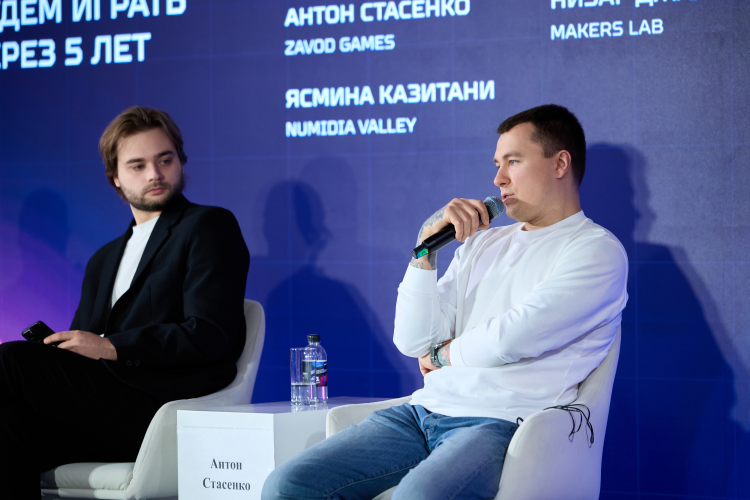
Anton Stasenko and Denis Levchik (ZAVOD Games) on the Results of 2025
How did 2025 turn out for your business? What key achievements would you highlight? What conclusions did you draw?
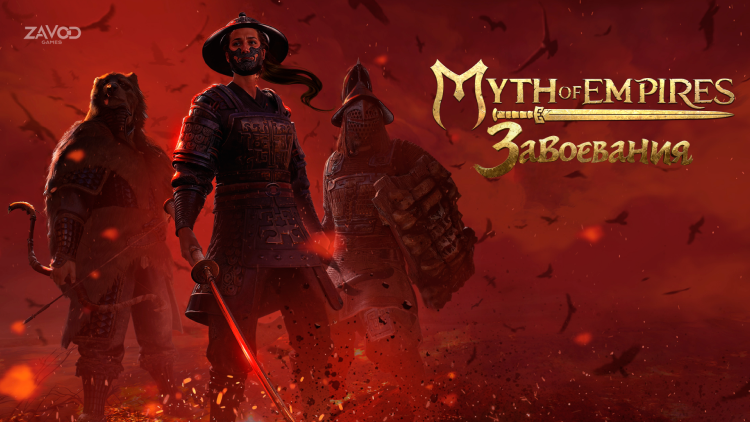
Anton Stasenko: 2025 marked the starting point for ZAVOD Games as a Russian game publisher. Over the past year, our focus was less on external momentum and more on internal groundwork. We were deliberately building the company as a sustainable structure: assembling the team, setting up operational and marketing processes, and laying out a multi-year development strategy. At the same time, we were deeply engaged with the market — conducting analysis, negotiating, and searching for partners. A major milestone came in October, when we made our first public appearance and announced our debut project, Myth of Empires: Conquest, which is scheduled for release next year.
International activity also played an important role. Attending key industry events allowed us to establish direct relationships with new partners and strengthen existing ones. The main takeaway from the year is that we clearly defined our role in the market — understanding which teams and projects we want to work with, and what level of quality we consider our baseline. That clarity became the key result of 2025.
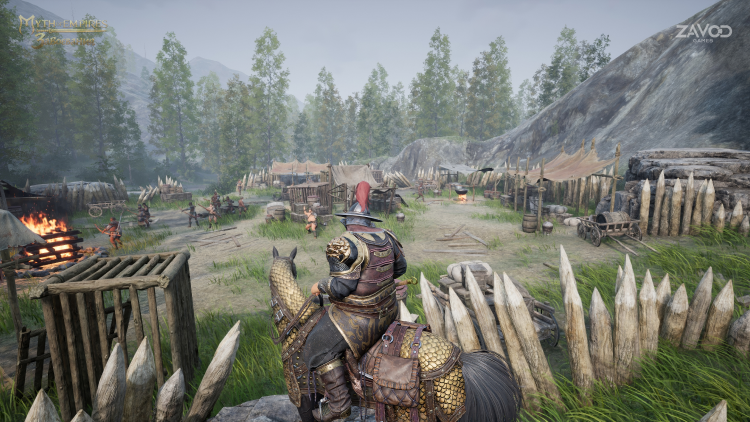
Denis Levchik: For us, 2025 was truly special — it was the year the company was born. We laid the foundation for a full-scale publishing operation: built the team, prepared the infrastructure, established production and marketing pipelines, and began active preparations for releases in Russia and the CIS markets.
It was a dynamic period filled with negotiations, partner searches, analytics, and deep immersion in the local market. The outcome of this work was our first major project announcement — Myth of Empires: Conquest, which we are preparing to launch early next year.
How has the publishing landscape changed from your perspective?
Anton: Throughout 2025, the Russian market continued adapting to a new reality. Global players that exited have not returned, but local platforms and new operator-backed stores have created a stable distribution infrastructure. This has expanded opportunities for publishers — especially those willing to take on full production and marketing responsibility rather than acting as formal distributors.
Competition has intensified: there are more strong products, while featured slots remain limited. As a result, the publisher’s role as a navigator and amplifier of a game’s market presence has only grown stronger.
Promotion tools have also evolved. The focus has shifted toward content marketing, local streamers, and platforms like Zen and VK Video. Budgets have become more rational, with ROI calculated down to every ruble. Due to unstable payment solutions in foreign stores, monetization strategies increasingly rely on local mechanics, including subscriptions and internal payment systems. This adds complexity but significantly increases the strategic importance of publishers.
Denis: The games market in 2025 continued to change rapidly, adapting to new trends and audience expectations. Many developers are targeting Western markets and working with recognizable IPs, often building cross-platform projects. Others closely analyze successful releases and attempt to replicate proven formulas in different settings, which further intensifies competition for users.
In Russia, another notable trend is the return of an older audience to projects that evoke nostalgia for the games of their youth. This creates renewed demand for genres and formats that were previously considered niche.
At the same time, player expectations remain extremely high. Players quickly assess gameplay, burn through content faster, and are harder to retain. Studios address this by expanding to new platforms and using AI tools to support content creation.
Steam still allows developers to reduce distribution costs and launch in multiple regions simultaneously. However, cultural adaptation, proper monetization, and support from a local partner — especially in community management — remain critical for long-term success.
Have developer–publisher relationships changed? Has it become easier or harder to work together?
Anton: Studios have become more pragmatic. Many now clearly understand what they expect from a publisher: marketing and operational expertise, access to analytics, and LiveOps support. Teams are more cautious in their promises and more attentive to project economics. Publishers are being brought in earlier — at stages where developers previously tried to manage on their own. The quality of pitches, presentations, and metric literacy has increased significantly. Developers come with competitive products and a clear understanding of why they need a publisher, which undoubtedly simplifies early communication.
Denis: Developers today are far more knowledgeable about the industry and better adapted to its challenges. They are more professional — but also more demanding. Development costs have risen, along with financial expectations, making the ability to negotiate and balance interests a key skill for any successful publisher.
Regional specifics still matter. Chinese studios remain extremely dynamic, quickly reacting to trends and experimenting with mechanics. Korean teams emphasize quality and stability, maintaining high technical standards while favoring familiar gameplay and monetization models.
The Russian market continues to evolve rapidly, with an increasing number of strong projects emerging from local teams.
How did 2025 turn out for the niche you typically work in?
Anton: Online games with strong social components continue to demonstrate high engagement. Players want more than just gameplay — they want communication, progression, and a sense of belonging to a community. This is especially noticeable amid fatigue from single-player releases and an oversaturated mobile market.
At the same time, quality expectations have risen. Players compare any new project to genre leaders, even if it’s a free-to-play game on a local platform. Only projects that hook players quickly and meet visual expectations succeed. Strong MMORPG and PvP session-based cases confirm that live online games with a solid meta and ongoing support can generate stable revenue even with limited access to international platforms.
Denis: The free-to-play market is actively searching for balance between unique gameplay — which requires increasing development investment — and the volume of content needed for sustainable monetization. The online audience is aging and becoming more demanding, but is also more willing to pay for genuinely high-quality experiences.
We view the dynamics of our niche positively and are confident it will continue to grow, creating opportunities for new successful projects.
What lessons from 2025 would you highlight for developers preparing for release?
Anton: First, developers should focus less on genre and more on player behavior models — understanding how players actually spend time in the game. Flexible gameplay loops that can adapt and expand to different playstyles are essential.
Social spaces are becoming just as important as levels or mechanics. Communities often matter more than individual features, as strong social layers directly impact retention, organic growth, and long product lifecycles. Players are increasingly shifting from passive consumers to co-creators who influence game development through their behavior.
Innovations should be introduced gradually, tested for real engagement and commercial impact before being scaled. And today, it’s crucial to be able to go global without massive budgets — by focusing on product value and thoughtful audience engagement.
Denis: The key lessons remain largely unchanged. Players do not forgive unfinished games — technical issues immediately affect ratings and long-term potential. A game must launch in a highly polished state.
Audiences also continue to value honest communication and transparent feedback. Regular updates, fixes, and responsiveness often matter more than ambitious promises, especially in the first weeks after launch.
The first session is critical: roughly the first 30 minutes of gameplay should deliver a clear sense of progress, engagement, and interest. In a crowded market, retaining younger audiences is particularly challenging, so every available tool must be used to hook players immediately.
Finally, the market increasingly values clear, niche products with deep mechanics and intuitive gameplay. Games with character and “soul” consistently outperform visually impressive but generic clones.
Which trends do you expect to strengthen in 2026?
Anton: Looking ahead to 2026 and beyond, personalization of game worlds will continue to grow. Content, difficulty, and scenarios will increasingly adapt to individual player behavior. Hybrid formats will also strengthen — games that are accessible anywhere and adapt to how and where players choose to engage.
As mentioned earlier, social systems are becoming a core pillar: guilds, cooperative activities, seasonal goals, and shared rewards foster a sense of teamwork. For adult players, this often matters more than the volume of PvE content — people stay where they feel a living community.
The focus on indie development will also intensify, as small studios become more competitive thanks to flexibility and rapid experimentation.
Recognizable franchises deserve special mention. This approach will continue, and we started our journey with it as well. The market is currently in a phase where players value predictability, clarity, and familiarity. There is little appetite for large-scale experimental or technologically expensive formats. Well-known IPs provide stability and engagement, reduce risk, and help balance innovation with commercial sustainability.
Denis:The market will continue shifting toward live services and regular updates. Players expect a constant stream of content and new experiences. Cross-platform development will remain a strong and growing trend, expanding audiences and enabling more flexible monetization strategies.
At the same time, marketing costs will continue to rise, pushing the industry to focus more heavily on retention and community management. And, of course, AI will become an increasingly visible tool in content production and services — potentially evolving into a new industry standard.